
Sharing educational and pedagogical experiences
School plays a role in shaping a personal perspective on animated images. Developing a critical eye for these images can begin with early exposure to a variety of animated works from nursery school onwards. By offering rich explorations of animated short films, teachers enable pupils to develop their creativity and an active gaze towards animated images.
What place do animated images hold in schools today?
What are the pedagogical and didactic stakes of films?
What is the teacher's role in making use of films?
A critical eye on images
How can children understand images without being overwhelmed by them?
How can they be empowered to engage with images actively?
Every teacher has a personal approach. Share your own experiences with films and activities with children.
In her MEEF master's thesis, Marjolaine Rouzeau analyses her experience with her nursery class and explores the pedagogical use of animated films through the film "Bottle".
Download Marjolaine Rouzeau's thesis.
A short film about an impossible friendship, directed by Kirsten Lepore.
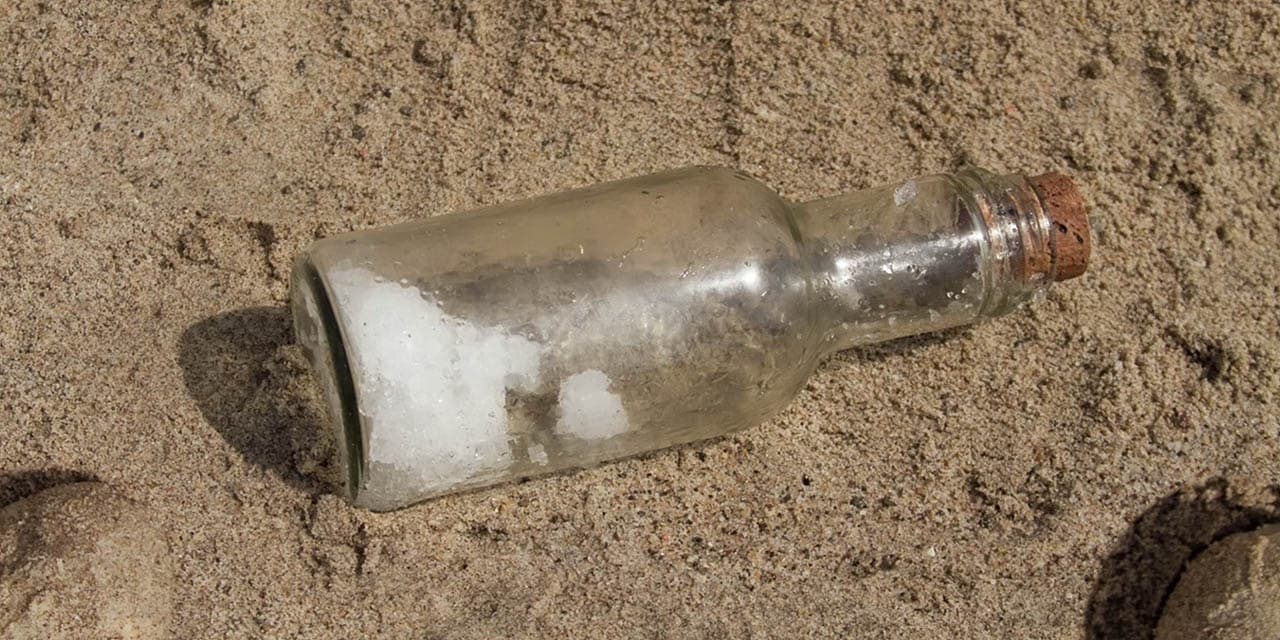
© Kirsten Lepore: Bottle.
A sand figure and a snow figure communicate by exchanging objects through a bottle carried from one shore to the other by the sea.
After several exchanges, they each set off from their shore to meet underwater... but sand and snow dissolve in water, and the two figures vanish before they can meet.
Marjolaine presents in her thesis the different comprehension sessions and draws a parallel between understanding the meaning of a film and studying a picture book in literature; it mobilises oral, occasionally written, and visual language, plus sound language.
From the short film, Marjolaine sets up three activities: a science activity on dissolution, an oral language activity — "the philo snack" on the theme of friendship — and a written language activity: a correspondence with the neighbouring class.