
What is the point of watching films? What do we offer children? What choices do they have? Why silent films? Why free movies?
Primary school teachers and producers of animated films, our work has led us to be interested in the educational dimension of films and short films for young audiences.
Do children have a choice in what they watch? Short films to raise awareness of artistic practices and support primary school curricula.
Cinema stimulates artistic sensitivity and contributes to the intellectual, sensory, emotional and relational development of children.
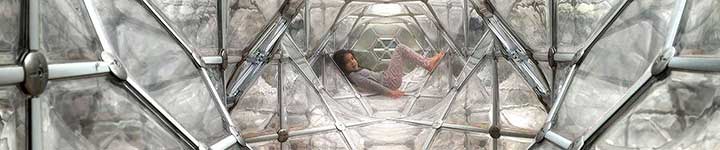
During school life, films create common references and allow children, from a very young age, to learn to live together and develop their personalities. As with literature, painting or music, cinema allows you to relax but also to build your tastes.
Students learn to have an opinion about what they watch. Each child can decide what their favorite films are, this is the starting point of creation.
Our children's film portal focuses on the poetic dimension and the originality of visual universes; we hope that it will become a tool for development, awareness and artistic awakening.
Have an opinion on what you watch
Ask children their opinions on what they are watching. Make them want to draw, tell stories, share their experiences, exchange their opinions, and invent new artistic practices.
Our education system emphasizes equal opportunities and cultural democratization. Beyond social inequalities, artistic education must allow each student equal access to knowledge in the field of art.
Children learn at school but also outside of school and choosing free films takes into account after-school and out-of-school time in the same way as school time. Free online tools and services on the Internet expand the classroom space and allow the sharing of digital resources but also the conditions of use between schools and parents.
Our portal offers the possibility of watching films studied in class again at home.
See at school, see again at home
Many directors, animation schools and production companies put their films online for free on the Internet with the sole aim of sharing their passion for cinema. Short films are rarely commercial films and today, there are few schemes or business models that make financial viability possible.
A new economic model
Viewable for free does not exclude the remuneration of the authors.
We have implemented an economic model to remunerate rights holders who offer their films for free on the Internet.
Teachers but also educational, cultural and social institutions and associations have the possibility of subscribing to an online platform for non-commercial use of films in public, in the form of workshops, from establishment terminals, or during public screenings.
Each subscription to the platform allows us to remunerate the authors of the films, to continue to offer the films free of charge on the Internet and contributes to the dissemination of quality cinema for young audiences. To encourage and help the creation of art films, the association redistributes 25% of revenues to the rights holders of the films.
Equal access to the seventh art
Subscribing to the offline portal also means, like crowdfunding, encouraging the creation and distribution of quality films.
Universal access to open educational resources
UNESCO also encourages universal access to quality education and we are considering the creation and use of open educational resources (OER) as free teaching and learning materials.
Silent feature films have practically disappeared from screens but the production of short films without words is prolific. We mainly select silent films, not because we do not appreciate the masterpieces of talking cinema, but because silent cinema gives children a voice.
Experiment with watching a silent film like The General by Buster Keaton and Clyde Bruckman (1926) with your students or children. From the first minute, the silent film transforms into a film with as many dialogues as children! Not a second without comments, interpretations, questions and laughter from children.
Silent cinema gives children a voice
The importance of the sound universe is of the first order with silent cinema and studying the role of music and sound effects in the staging of a film proves fascinating.
Have fun with the students watching a short film with your eyes closed, very rich in lessons on the influence of sounds on emotions and the dramatic effects of a film.
Short formats are particularly suitable for young viewers because they allow younger children to maintain their attention and curiosity.
Look less but look better
Children should not be subjected to what they watch as passive consumers and short films allow children to be active spectators.
Active spectators
Cinema must enrich the real world and not replace it. Too many animated images can harm real-world activities, but also free time for daydreaming and those moments of boredom that are so precious for children's development.
We created this portal to invite children to watch less but better.
Because there are very few, surprising, given the quantity of films on the internet. We started by looking for films to show our own children.
Wonderful educational short films
We found many that we liked, but we had to surf from one site to another, saving the links. We couldn't find a portal to access the films. So many online resources, free educational materials and wonderful short films conducive to the education and creativity of children, invisible to the general public, teachers, parents but especially children!
Moreover, many directors offer their films for free on the internet; but it is, unfortunately, difficult for parents or teachers to find them. The objective of our selection of films for children is therefore to increase the visibility of films and to guide adults in the choices they make for their children.
From 3 years old, and up to 99 years old! In fact, the selected films are not films created especially for children. In fact, they are rather films intended for older children. This is also what interests us with this film portal: offering children films that they do not easily have the opportunity to see.
TV? This tool does not allow you to choose the moment or the content…
As for films for children under 6 years old, 2 to 3 hours per week, and especially with parents. We must not simply show films to children, it must be a moment shared with parents, teachers or friends, which allows for discussion.
Do children have a choice in what they watch?
As with video games, they are wonderful educational tools, if children are not left alone. Between 6 and 15 years old, children will certainly choose to watch films more regularly, but we believe that this should not become an ordinary activity, it must remain a magical moment.
Eat your green beans! Yes, it's important. The child may not like a film but the diversity of experiences is important.

Furthermore, tastes can change, but even if he will never like green beans, he will have tasted them.
Blockbusters very quickly standardize children's tastes from a very young age and we think that we must try very early on to offer them more diversity, this is true for literature, music, the visual arts, as well as for meals.
The site is not only seen by school teachers, parents and children. More and more directors, festival directors and other film professionals consult it.
We wanted to discover and share a little of the underlying universe of the films, the conscious or unconscious references of the directors. Like the Proust Questionnaire and its English origin called “Confessions”, this questionnaire aims to reveal a little of the tastes and aspirations of the creators.
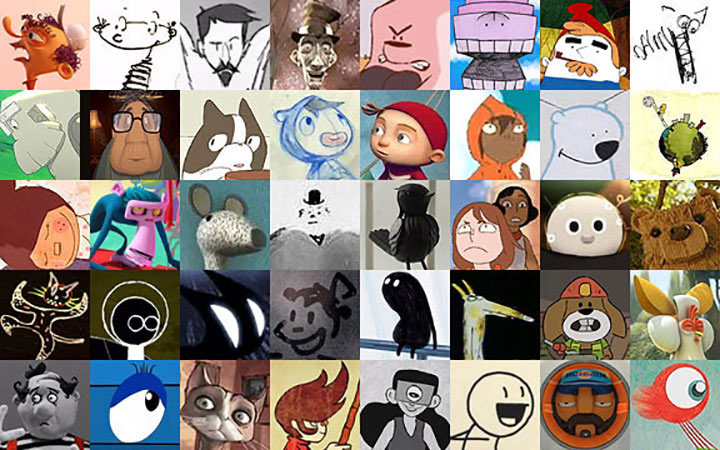
Unlike Proust's questionnaire, it does not ask questions about the real world of the creators (e.g.: my favorite virtue, what I appreciate most in my friends, etc.) but about their imaginary world (e.g.: the fictional character that I would like to meet, the fictional world in which I would not like to live).
This questionnaire highlights part of the behind the scenes of creation: the dreamlike universe of creators, the imaginary worlds that influence them.
“Through art alone, we can go beyond ourselves, know what another sees in this universe which is not the same as ours and whose landscapes would have remained as unknown to us as those that can be found in the moon.”
— Time Regained, Marcel Proust
“You have golden hair. Then it will be wonderful when you have tamed me! The wheat, which is golden, will make me remember you. And I shall love the sound of the wind in the wheat.”
— The Little Prince, Antoine de Saint-Exupéry
“The artist has the power to awaken the strength to act that lies dormant in other souls.”
— Friedrich Nietzsche